
|
Solo expert · Autonomous delivery · AI-augmented planning
Pragmatism rooted in Agile principles, adapted to the reality of each project.
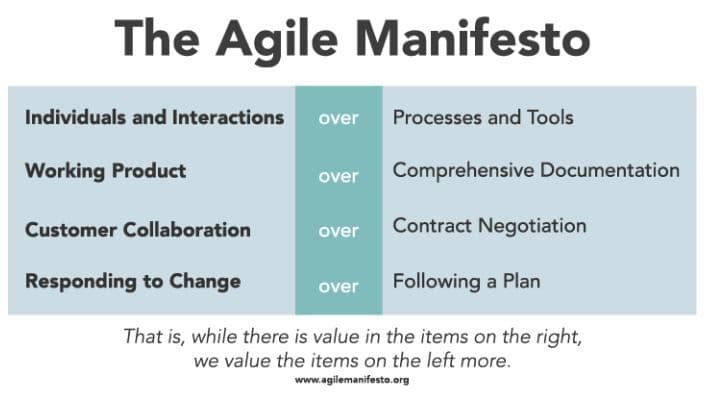
Effective project management does not rest on a rigid methodology, but on the ability to adapt the best tools to each delivery context. Paul applies the core values of the Agile Manifesto while integrating the structural rigor of Waterfall where it adds value.
Individuals and interactions > processes and tools
Direct conversations with the client take precedence over formal processes.
Working software > comprehensive documentation
Functional deliverables at each iteration — not documentation without value.
Client collaboration > contract negotiation
Project success comes through continuous partnership, not contract management.
Responding to change > following a plan
Requirements evolve — the method adapts to deliver what has value.
The hybrid approach begins with a full scope decomposition (WBS) to establish a comprehensive project vision. A Gantt phase plan defines the sequence and milestones. Iterative sprints are layered on top to enable continuous feedback and adaptation — without ever losing sight of the overall plan.
A concrete agentic infrastructure — not generic AI. Five dimensions that replace the functions of an entire team.
Paul operates 70+ specialized AI agents and 20+ orchestration prompts — applied directly to project management. This is not generic AI assistance: it is an agentic infrastructure that replaces the coordination and review functions typically performed by a team of 3 to 5.
Requirements Decomposition
Agents parse client briefs, decompose scope into structured WBS items, and flag missing acceptance criteria — before development begins.
Automated Progress Tracking
Agent pipelines read commit activity, CI/CD results, and test coverage to produce objective progress reports. No manual status updates.
Scope Creep Detection
Agents continuously compare in-progress work against the original scope definition — drift, missing requirements, and architectural deviations are flagged as they emerge.
Automated Quality Gates
Every deliverable passes through specialized review agents before advancing: code review, coverage threshold, requirements traceability, documentation completeness.
Solo Expert · Team Throughput
70+ specialized agents replace the coordination and review functions of a team of 3–5. Paul's senior expertise validates every agent output.
Management Tools
The agentic layer operates on top of these tools — reading data, generating reports, enforcing quality gates.
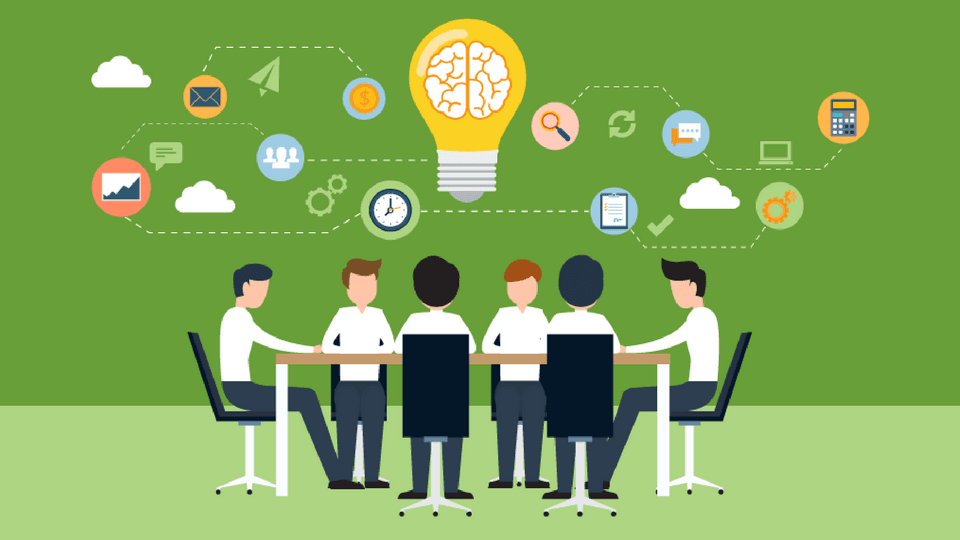
Paul manages scope, planning, technical execution, client communication, and delivery — without a project manager, technical lead, or coordination layer. The AI agentic layer is the enabler of this throughput, not raw hours worked.
A traditional team requires a project manager, a technical lead, and developers — each with their own agenda, information handoffs, and misalignment risks. With Paul, a single point of contact masters the full cycle: from requirements definition to production, with continuous automated oversight and no team integration overhead.
Projects managed with transparency — not a black box. Each phase produces visible client deliverables.
Scoping workshop, objective definition, stakeholder identification. Agents decompose the brief into WBS items and flag ambiguities before work begins.
Full scope breakdown, phase sequencing, client milestones. The Gantt plan is shared and versioned — not a static document.
Short sprints with client feedback at each iteration. Agents monitor progress and flag drift in real time.
Progress reports generated by agents (commits, CI/CD, coverage) — contextualized and delivered by Paul. Transparency is not optional.
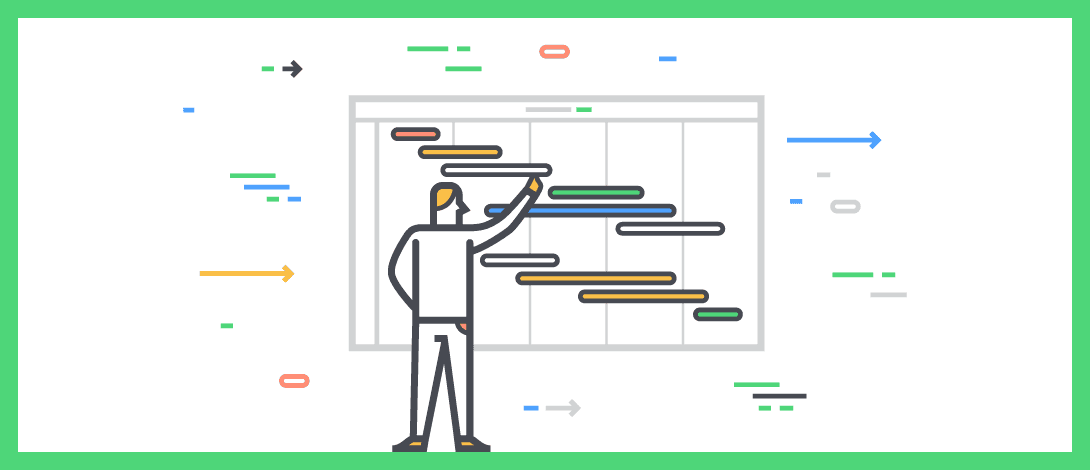
Gantt chart illustrating phase planning and milestones for a project managed by Paul Bareil
15+ years of experience. Clients in photonics, medical physics, industrial automation, and SaaS. One expert, team-level output, zero coordination overhead.