
|
Transform your production with agentic AI and modern IoT. A pragmatic, results-oriented approach led by a PhD consultant with 15 years of field experience.
The fourth industrial revolution — in practice.
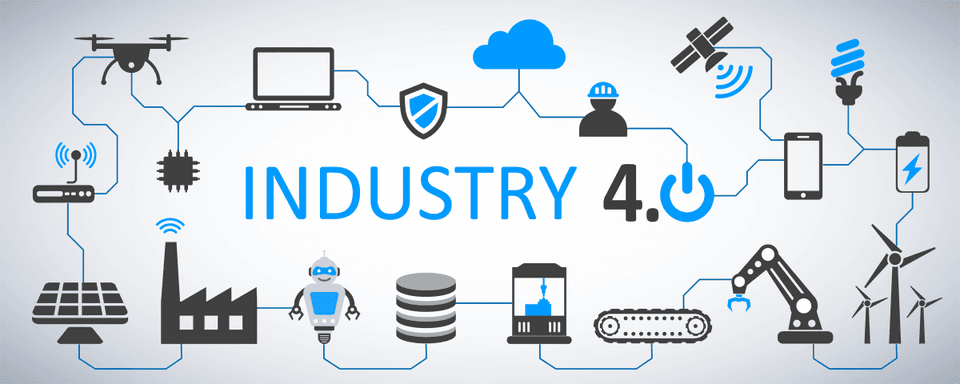
Industry 4.0 is the interconnection of your machines, sensors, and management systems into a coherent data ecosystem — giving you visibility into what is happening, the ability to anticipate what will happen next, and the tools to automate high-volume decisions. Concretely: less waste, fewer unplanned downtime events, and full traceability from part to delivery.
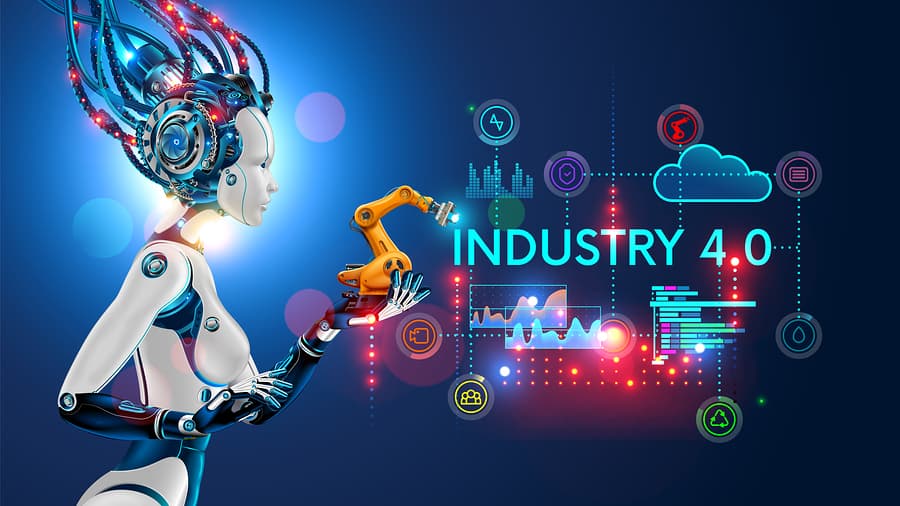
In 2026, Industry 4.0 goes well beyond dashboards and connected sensors. LLM agentic workflows automate complex, multi-step decisions that previously required constant human intervention. Digital twins faithfully mirror your production line in real time. Edge AI analyzes quality at production line speed. This is the generation of capabilities Paul brings to his clients.
Machine & data interconnection
Real-time AI analysis
Autonomous agentic flows
Every recovered First Pass Yield (FPY) percentage point is a direct reduction in scrap and rework costs. Paul works with you to instrument your processes, model your losses, and deploy predictive analytics algorithms that detect quality drift before it generates defective parts.
Autonomous decisions, 24/7.
Industrial automation is no longer limited to robotic arms on the line. In 2026, the fastest gains come from automating decision loops: anomaly detected by sensor → diagnosis by AI agent → work order created in ERP → alert sent to the right technician. All of this in seconds, without human intervention.
An agentic workflow, concretely: an AI agent continuously monitors your sensor data, identifies abnormal behavior, consults maintenance history, generates a prioritized work order, and updates the ERP system — without your team having to intervene at each occurrence. Your staff focuses on complex cases and strategic decisions, not manual alert triage.
From raw data to decisions in milliseconds.
5G sensors and edge computing modules process data directly on the production line, without network latency. The result: real-time quality control decisions at production line speed.
Computer vision models detect surface defects, assembly errors, and dimensional deviations at speeds impossible for the human eye — with full per-part traceability.
A virtual replica of your production line, synchronized in real time with your equipment. Simulate the impact of a parameter change, diagnose a failure, or test a process improvement — without stopping production.
A structured methodology, without big-bang risk.
Identification of measurable operational losses today — bottlenecks, unplanned downtime, recurring quality defects, information silos.
Before any technology decision: define the success metrics. Reduce scrap rate by X%? Reduce MTTR by Y hours? ROI guides every technology choice.
Assessment of your data infrastructure, equipment connectivity, and organizational maturity — to understand where you are and what is realistically achievable.
A technology-agnostic plan with prioritized initiatives ranked by impact-to-effort ratio — not a catalog of trending technologies.
Iterative delivery with measurable milestones at each phase. Low risk, continuous learning, and the ability to adjust course at every step.
Technology without people doesn't work.
Industry 4.0 projects that fail typically do not fail because of technology — they fail because teams were not brought along in the process. Paul integrates change management from the audit phase: identifying potential resistance, involving key operators in the design process, and building a training plan tailored to existing competencies.
The goal is not to replace workers with machines, but to give them tools that eliminate repetitive, low-value tasks and enhance their operational expertise. A maintenance technician who receives a precise predictive alert is more effective — and more satisfied — than a technician who reacts urgently to unexpected breakdowns.

A development methodology that changes the rules.
Paul uses a suite of 70+ specialized AI agents and 20+ orchestration prompts to automate the most time-consuming steps in industrial software development: requirements analysis, code generation, automated testing, code review, and deployment pipeline configuration. These are not generic coding assistants — they are agents trained on specific engineering domains that collaborate in orchestrated sequences.
For an Industry 4.0 project, this translates concretely to: accelerated development of industrial data pipelines, rapid prototyping of anomaly detection and predictive maintenance algorithms, AI-assisted integration with PLC, SCADA, and ERP systems, and automated test coverage for safety-critical industrial code.
The result for the client: projects that would take a traditional consultancy 6–12 months to deliver can be scoped, prototyped, and deployed in a fraction of that timeline — without sacrificing engineering rigor. This is the concrete advantage of a boutique consultant with state-of-the-art tooling over a large generalist firm.
Each protocol is an independent service — no tangled monolithic architecture
The fundamental challenge of production hardware testing is protocol multiplicity. A monolithic architecture trying to simultaneously handle UART, CAN, Ethernet, printers, and programmers quickly becomes an inextricable tangle of dependencies — fragile, hard to maintain, and impossible to scale as new hardware types are added to the fleet.
Microservice architecture solves this at the root: each protocol becomes an autonomous service communicating via a central event bus. Adding a new hardware type means deploying a new service without touching the rest of the system. Complexity stays local; the overall system stays simple.
Paul designed and implemented a complete battery test system for a client managing a fleet of 300+ units, including destructive tests. The system includes a battery emulator, an automated regression engine, and service adapters for every interface: UART modules, CAN modules, Ethernet communication, label printers, and firmware programmers. Result: a reproducible production pipeline that automatically detects regressions as new hardware models are added to the fleet.
A first conversation with Paul is an honest diagnostic of your operational pain points, a candid assessment of your 4.0 readiness, and a clear picture of what a first engagement could accomplish — no commitment, no jargon. You walk away with a concrete perspective, whether you decide to work with him or not.